RFE
11 Nov 2025, 14:43 GMT+10
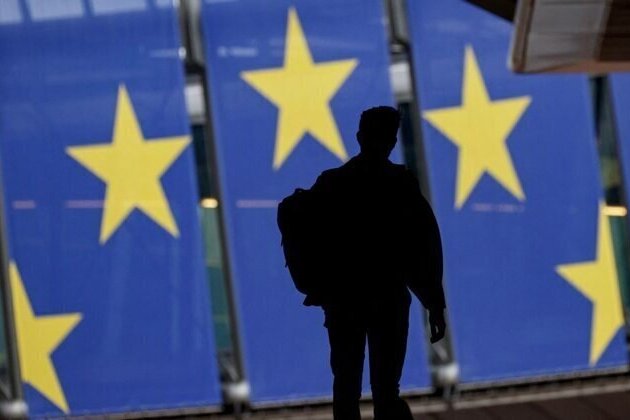
The European Commission is preparing to present its latest plan to protect the bloc and EU candidate countries from foreign interference and political manipulation.
The "democracy shield," as it's being called, is a collection of proposals to be rolled out in the coming years. An advanced draft of the document, seen by RFE/RL, emphasizes that Russia is the main direct threat to both the European Union and those nations aiming to join the bloc.
The European Commission will present the plan on November 12.
"In addition to its brutal war of aggression against Ukraine, Russia is also escalating hybrid attacks, waging a battle of influence against Europe. The tactics used are reaching deep into the fabric of our societies, with potentially long-lasting impacts," the draft says.
"By spreading deceitful narratives, sometimes including the manipulation and falsification of historical facts, they try to erode trust in democratic systems."
No other country is mentioned in the 30-page-text, even though the bloc has previously voiced worries about China's attempt to wield political influence throughout the continent.
The issue of fighting disinformation and foreign interference is controversial both in Brussels and beyond.
The EU is still reeling from the broadside fired by the US Vice President JD Vance at the Munich Security Conference in February in which he argued that the danger for the EU wasn't coming from China or Russia but rather internally via censorship and suppression of dissent and voices.
The criticism came shortly after Romania's Constitutional Court in December 2024 annulled the result of the first round of voting in the presidential election just days before the second round was due to take place.
SEE ALSO:
Romania's 'King Of TikTok' Tied To Alleged Scheme Boosting Far-Right Presidential Candidate
The court ruled that the Kremlin had run an online campaign to promote nationalist candidate Calin Georgescu, who finished first. Many critics accused the court of political interference in an election and impinging on free speech.
The European Commission is therefore treading carefully.
While part of that caution comes because many of these issues are the competence of individual member states, it's also because Brussels is wary of being even more antagonistic toward large online platforms, notably US-based ones such as Google, Microsoft and Meta, as transatlantic relations have become unpredictable with trade wars and fears of the United States pulling out more troops from the Continent.
Yet the draft suggests the EU must engage with these tech giants. Most of them, with the glaring exception of Elon Musk's X, have signed up to the EU's Code of Conduct on Disinformation, which means companies such as Facebook and TikTok provide regular updates to the European Commission on how they're addressing the issue.
The paper suggests the European Commission should push such companies to do more to "demonetize disinformation" and improve the detection and labeling of AI-generated and manipulated content.
The focus of the "democracy shield" is threefold: improving situational awareness, supporting democratic institutions and free media, and boosting citizen engagement.
The main proposal is for the creation of a European Center for Democratic Resilience. This would be a hub that would "link together existing networks and structures working on prevention, detection, analysis, and response to patterns of threats in the information space, and work to develop joint approaches, practices and methodologies and exchanging relevant data and analyses."
SEE ALSO:
Moldova's Pro-EU Election Result A Win For Brussels As Much As Chisinau
The EU tried this once before, in 2019, but the Rapid Alert System never really took off. This second attempt will involve EU institutions, member states, and even candidate countries such as Moldova and Ukraine as well as those in the Western Balkans.
The European Commission, however, wants to make it clear this isn't some sort of Ministry of Truth. The plans would be rolled out gradually, participation will be voluntary, and the center will operate in "respect EU and national competences."
Other ideas include the roll-out of an "EU digital identity wallet" next year for EU citizens and residents, the creation of a European network of fact-checkers who will work on a fact-checking repository, and "a voluntary network of influencers to raise awareness about relevant EU rules and promote the exchange of best practice."
Recalling September's parliamentary election in Moldova, in which Russia was heavily involved in trying to shape the outcome, the draft also suggests that EU election observation missions outside the bloc should be strengthened "to assist national authorities throughout the electoral cycle" -- something Brussels is likely to do again in next year's hotly contested parliamentary elections in Armenia.
SEE ALSO:
'Mirror Politics' And Deepfakes: How Authoritarians Are Honing Their Disinformation Game
In the same fashion, there is also a proposal to extend the mandate of the European Digital Media Observatory, which provides research and analysis on disinformation campaigns. It will now get more funding to do more work around elections, not only in EU member states but also partner countries.
The financial backing of independent media and journalism in the EU neighborhood, including Belarus and Russia, is also mentioned in the paper.
No concrete sums are mentioned. However, many of the programs suggested under the "democracy shield" are currently included in the European Commission's 2 trillion euro ($2.3 trillion) proposal for the next seven-year EU budget, starting in 2028.
Get a daily dose of Colorado Star news through our daily email, its complimentary and keeps you fully up to date with world and business news as well.
Publish news of your business, community or sports group, personnel appointments, major event and more by submitting a news release to Colorado Star.
More InformationANAPA, Russia: Russians are increasingly turning to homegrown wines as Western sanctions reshape consumer habits and limit access to...
SEATTLE, Washington: Starbucks faces renewed labor unrest as unionized baristas voted to authorize an open-ended strike ahead of the...
TOKYO, Japan: Japanese automakers are deepening their bets on India, shifting billions of dollars in investment from China to build...
The European Commission is preparing to present its latest plan to protect the bloc and EU candidate countries from foreign interference...
It's the first visit by a Syrian leader to the White House since Syria's independence in 1946. WASHINGTON, Nov. 10 (Xinhua) -- U.S....
New Delhi [India], November 10 (ANI): The Indian Sugar and Bio-Energy Manufacturers Association (ISMA) has welcomed the government's...
WASHINGTON, D.C.: The U.S. Senate on November 9 took a significant step toward ending the federal government shutdown, now in its 41st...
WASHINGTON, D.C.: The U.S. Supreme Court privately discussed late this week whether to take up a challenge that seeks to overturn its...
SHANGHAI, China: China has urged the Netherlands to take concrete action to help resolve the Nexperia dispute, which has disrupted...
MAE SOT, Thailand: India repatriated the first group of its citizens who fled to Thailand from Myanmar, where they had been working...
WASHINGTON, D.C.: U.S. retailers are promising a cheaper Thanksgiving this year, but there's a catch. The savings come not from price...
BOSTON, Massachusetts: The U.S. Supreme Court this week granted the Trump administration's emergency request to temporarily block a...